
The Approach
An integration of contemplative wisdom and trauma-informed care
Trauma is not a character flaw or a sign of weakness. It is the nervous system's intelligent response to experiences that exceeded its capacity to process. And just as the nervous system learned to protect through contraction, disconnection, and hypervigilance — it can also learn, gradually and gently, to open again.
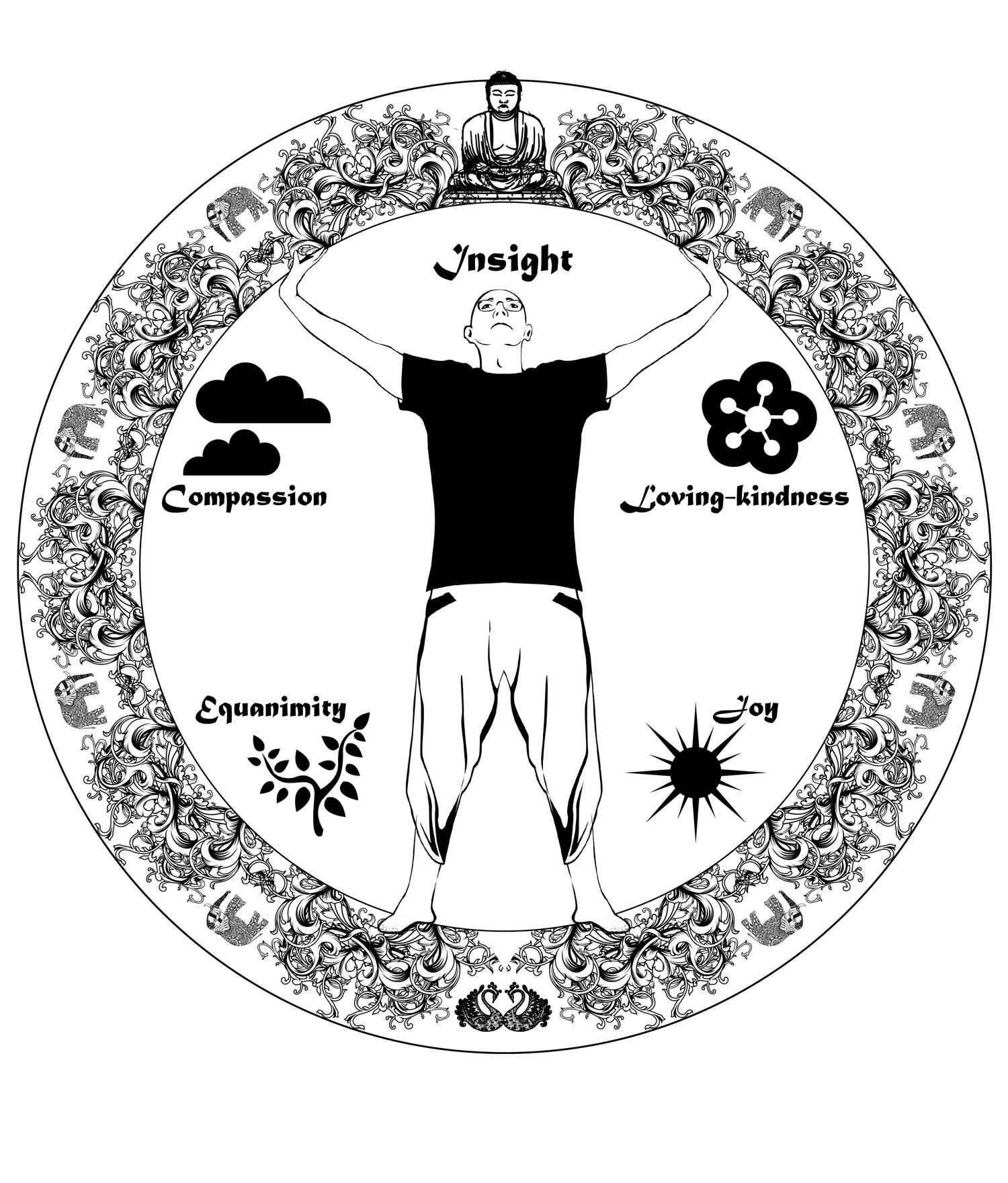
Christopher's approach draws on a carefully integrated set of modalities, each chosen for its capacity to work with the whole person — body, mind, heart, and relational field. No single framework holds the complete picture. Together, they offer something more comprehensive than any one approach alone.

We practice meeting ourselves with warmth and non-judgement.
This is the power which cultivates healing, and ultimately, freedom.
Somatic Experiencing
Developed by Dr. Peter Levine, Somatic Experiencing works with the body's physiological responses to overwhelming experience. Rather than asking you to relive or narrate traumatic events in detail, it attends carefully to how the body experiences trauma — sensation, tension, impulse, breath — and supports the nervous system's natural capacity to complete what was interrupted and return to equilibrium.
Sensorimotor Psychotherapy
Developed by Pat Ogden, Sensorimotor Psychotherapy integrates body-centred techniques with psychological understanding. It recognises that traumatic experience is often held in posture, movement, and physical habit — and that working directly and compassionately with these physical patterns can open pathways to healing that talk alone cannot reach.
EMDR
Eye Movement Desensitisation and Reprocessing is one of the most extensively researched trauma treatments available. By engaging the brain's natural information-processing mechanisms — through bilateral stimulation — EMDR supports the integration of traumatic memories that have remained fragmented and dysregulating. The result, for many people, is a significant reduction in the emotional charge of difficult memories.
Buddhist Psychology
The earliest teachings of the Buddha offered a remarkably precise map of the mind — its tendencies toward suffering, its capacity for liberation, and the conditions that support genuine wellbeing. Christopher draws on this tradition not as religion but as psychology: a rigorous, empirically grounded framework for understanding how attention, awareness, and compassionate presence can transform our relationship to experience.
Central to Buddhist psychology is the understanding that suffering arises from craving — the compulsive grasping and aversion that drives so much of human pain. For those navigating addiction recovery, this teaching is not abstract philosophy. It is a direct and practical map of the addictive mind, and the path it points toward — investigation, awareness, and gradual liberation from compulsive patterns — offers a profound complement to contemporary recovery work.
Nonviolent Communication
Developed by Marshall Rosenberg, Nonviolent Communication offers a framework for understanding human experience through the lens of universal needs. In a therapeutic context, NVC deepens empathic presence — both the practitioner's capacity to receive another's experience without judgment, and the client's capacity to understand and articulate their own inner life with clarity and self-compassion.
Trauma-Sensitive Mindfulness
Mindfulness, skillfully taught, can be a profound support for trauma recovery. Trauma-sensitively taught, it becomes something even more precise — an invitation to meet present-moment experience with curiosity and kindness, without overwhelming a nervous system that may already be carrying a great deal. Christopher has forty years of contemplative practice and extensive training in trauma-sensitive applications of mindfulness.
Resilience and Positive Affect
Recovery is not simply the removal of suffering. It is the active cultivation of the conditions for a life that feels worth living — and these conditions are not merely the destination of healing. They are, crucially, what makes healing possible in the first place.
The deliberate cultivation of joy, gratitude, kindness, and compassion does something precise and necessary: it expands the window of tolerance — the capacity of the nervous system to remain present with difficult sensations and emotions without becoming overwhelmed or shutting down. In this way, positive affect practices provide both the inspiration to continue the healing journey and the neurobiological ground from which the more challenging work of trauma processing can be safely approached.
These are not superficial additions to the therapeutic process. They are, as the neuroscience of positive affect increasingly confirms, essential ingredients in lasting recovery.
The Integration
What brings these modalities together is not eclecticism but a coherent philosophy: that human beings heal most fully when they are met with safety, attunement, and genuine presence — and when the work addresses not only what has been broken, but what is already whole.